
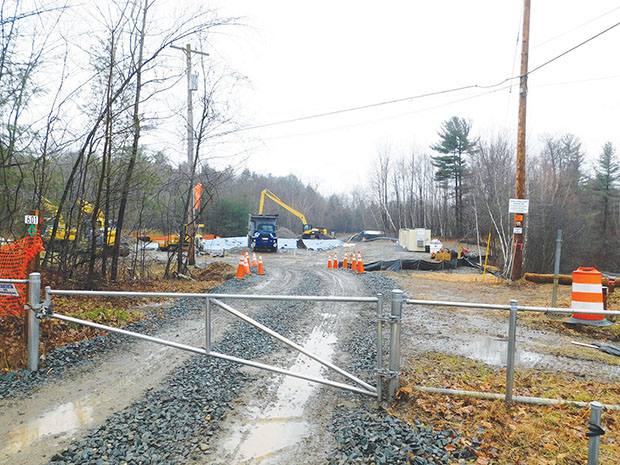
Six different presenters came before a public meeting Saturday, January 5 at the Comfort Inn in Schodack. All of the presenters hope the Environmental Protection Agency (EPA) will choose them to clean up the 46,000 plus tons of toxic waste, mostly PCBs, dumped there in the 1950’s by General Electric and Schenectady International, which is now know as the SI Group. The landfill on Mead Road in Nassau, is now a federal Superfund site, and the remediation efforts are now at a stage where cleanup options are being considered. The removal of the contaminated topsoil portion of the project has been halted for the winter, with a little more than 11,000 tons removed so far.
The forum, co-sponsored by a group known as UNCAGED, the United Neighbors Concerned About GE Dewey Loeffel Landfill and the Nassau Lake Park Improvement Association, was meant to give the public and local officials, a chance to familiarize themselves with these various options, and be ready to offer up their input when the Federal Government reviews a draft Identification of Candidate Technologies Memorandum, which was developed by GE and the SI Group. According to UNCAGED spokeswoman Kathy Travers-Main, the EPA is currently reviewing this draft Memorandum, which will be followed by a feasibility study to investigate the various cleanup operations for the landfill and ground water.
Rensselaer County Executive Steve McLaughlin was one of those who addressed the gathering, stating “ This problem has been facing us for more than 60 years. With over 35,000 tons of toxic waste still buried there, the Loeffel toxic waste site contains more waste than Love Canal (a toxic site near Niagara Falls that was a national headline maker for many years). The Executive also said, “The Mead Road landfill is a scar to our community and real and lasting progress towards a comprehensive cleanup is needed and awaited by the community.”
Town of Nassau Supervisor Dave Fleming called Saturday’s session extremely helpful and added “the scientists that were there were universally aligned that the primary contamination at the landfill must be dealt with first before you can deal with remediation.”
Dumping of the toxic waste started in 1953 in a wetland area, where the contamination spread into the ground and surface water and the ecosystem, including Nassau Lake.