
What to Expect If Marijuana Is Legalized In NYS
By Doug La Rocque
Governor Andrew Cuomo was quoted in many media sources this past weekend as saying if legislation to decriminalize small amounts of marijuana isn’t passed by the state legislature during this year’s budget bills debate, he doubts it will get another chance. There is, of course, the argument over the pros and cons of the legislation, with prominent organizations coming down on both sides of the issue. The latest to offer its support for decriminalization is the New York State Bar Association, which issued a press release on Saturday, February 1 explaining the reasoning behind its endorsement.

The Governor’s bill would have sales to retail dispensaries taxed at a rate of 20 percent, for up to one ounce of marijuana. Some Democratic members of the state legislature want to see as much as three ounces made the threshold for a legal purchase.
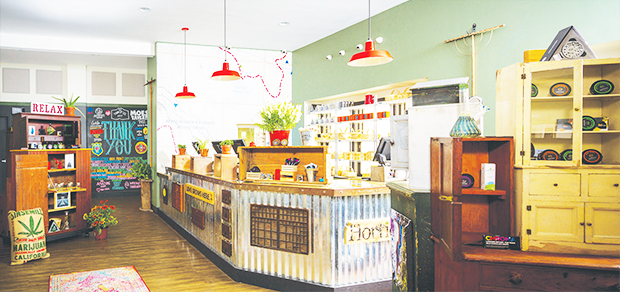
So if the bill becomes law, what will it mean for Rensselaer County and other nearby areas.
The Eastwick Press recently spoke with Meg Sanders, one of the founders and chief Executive Officer at Canna Provisions, who owns a retail dispensary in Lee, Massachusetts, not far from the New York State boarder along the Massachusetts Turnpike. There were two very interesting points that came out of that conversation. First, about 50 percent of their clientele come from New York and she expects the demand to be there in Rensselaer County. Second, if the legislation is passed, you will not see a flood of dispensaries opening up anytime soon.
Ms. Sanders played a fundamental role in setting up New York’s Medical Marijuana industry, which she says is failing, in part because of over regulation and because of the quality of the product. She has also studied the various pieces of proposed legislation for any legalization in this state. One of the primary components for opening a dispensary will be cost, which she indicated between licensing, engineering, building construction and regulations as well as local ordinances and fees, could top one million dollars. And she believes that all the local issues must be resolved and all permits in place, before you can even apply for a state license. If, however, a person is able to clear all these hurdles, the return could be lucrative, for the dispensary owner, state, county and the locality. This is because of the fees and taxes it could generate. For example, Canna Provisions has been open for about six months, and has already generate close to a half million dollars in tax revenue. Their business has been so good at the Lee operation and a second facility in Massachusetts, they are considering opening a third location. Could that possibly be in New York? Ms. Sanders is not so sure they want to cross the boarder, for a number of reasons. One of these is what rules and regulations that may go legalization, and what profitability is there on such a large investment. She also feels they need to concentrate of the Massachusetts business, because if legalization occurs in New York, those “boarder jumpers” currently patronizing their Lee location, may well want to shop local instead.
There is also the age-old matter of supply and demand. One of the first states in the nation to legalize marijuana was Oregon. They currently have so many dispensaries, the state Liquor Commission, which regulates the marijuana industry there, has now been given permission by the State of Oregon, to deny applications, based simply on a localities supply and the demand for the product.
New York, like many states, now allows the sale of cannabidiol products, more commonly known simply as CBD. It is derived directly from the hemp, which is called a cousin of the marijuana plant. It is said by those who produce it, and by the minions that use the balm, oil and edibles, to have several medical benefits, and is expected to be tied to any proposed marijuana market.
So what does it all mean? It’s wait and see what happens in the legislative chambers of the state capitol, first of all. Second, who will be willing to lay out the funds to start a marijuana dispensary business, what will the reaction of the localities where these dispensaries are proposed be, and will there really be a great return on investment and for how long. As in the case of Canna Provisions, the return is there, and it came quickly. Will that be the case in New York, or might it blossom so quickly, that it’s lucrative today, and a money loser tomorrow. The Eastwick Press has heard several people describe the blossoming cannabis industry as “the wild west of the 21st century.” Only time will tell if it grows and thrives, or fades into a ghost town.
Caption: 1). Canna Provisions CEO Meg Sanders