
Internet Access Is Pushed By Ashby and Delgado
In a press release on Tuesday, October 6, 107th District Assemblyman Jake Ashby announced he is co-sponsoring a bill that will repeal a tax he claims has caused many in New York State to go without broadband internet. The legislation, drafted by Assemblyman Mark Walczyk of Watertown, will incentivize broadband providers to install services across the state, but especially in rural regions that are severely lacking access to reliable and high-speed internet.
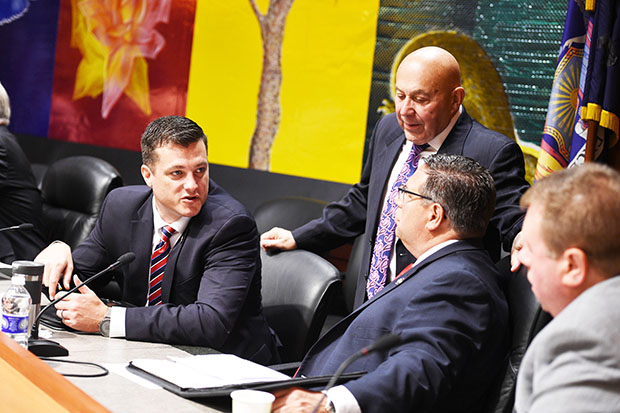
Assemblyman Ashby says he believes by repealing this burdensome tax, an increasing number of New York state citizens will have quality internet that is essential in their daily lives. Due to the high costs of installing these services, providers across the state haven’t expanded broadband internet coverage, causing many to face high costs or to simply go without effective internet. This tax disproportionately impacts people in rural areas, widening the gap of opportunities.
“Access to high-speed and reliable internet is a necessity during these unprecedented times due to COVID-19,” said Ashby. “With millions of people across the state working and learning from home, the demand for basic internet services is at an all-time high. A person’s ability to work and learn from home shouldn’t be determined by what part of New York state they live in.”
The press release further says that as a co-sponsor of this legislation, Ashby is fighting to ensure that the people of New York have access to basic services. “People without these basic services are at a severe disadvantage,” said Ashby. “During these challenging and unpredictable times, internet services are essential and the people of New York deserve to have the best possible service.”
Congressman Delgado
Pushing The Federal Government
U.S. Representative Antonio Delgado has also been in the fight for better rural internet accessibility since he took office in January of 2019. The Congressman recently penned an editorial for Rural Delivery, the newsletter for the New York State Rural Housing Coalition, in which he said “every day, I hear from folks across my district in upstate New York about their inability to access basic broadband. These conversations range from students who are unable to reach the virtual classroom, to seniors in search of tele-medicine services, to small business owners looking for new ways to connect with customers in the digital age.”
The COVID-19 pandemic has made it abundantly clear that affordable high-speed coverage cannot be a luxury for the few. Instead, it must be treated as a basic utility and made available to every American. Just as housing and education are critical to reach the American Dream, so too is reliable broadband access. We need to treat it as such.
These are not new concerns for our community. This time last year, I held a rural broadband field hearing at Columbia-Greene Community College in Hudson, where I invited Commissioner Geoffrey Starks of the Federal Communications Commission (FCC) to meet with folks across NY-19 and discuss how their lives have been impacted by a lack of high-speed internet in our area.
During this conversation, Commissioner Starks heard from small business owners, educators, medical professionals, electric co-op owners, and people throughout our region about how the scarcity and cost of rural broadband impacts their businesses and day-to-day life. Even a year ago, before the pandemic, it was clear that the digital divide was holding back our rural communities.
Since this hearing, Congressman Delgado has sponsored or co-sponsored legislation to deal with what is often called “census block mapping,” an approach that assumes that if one house in a census block has broadband access, then every house in the entire block can receive service. In his editorial, Mr. Delgado said “This does not work however, when attempting to accurately account for rural areas, which lack dense populations.”